The IRS Made a Mistake. You Still Have to Pay.
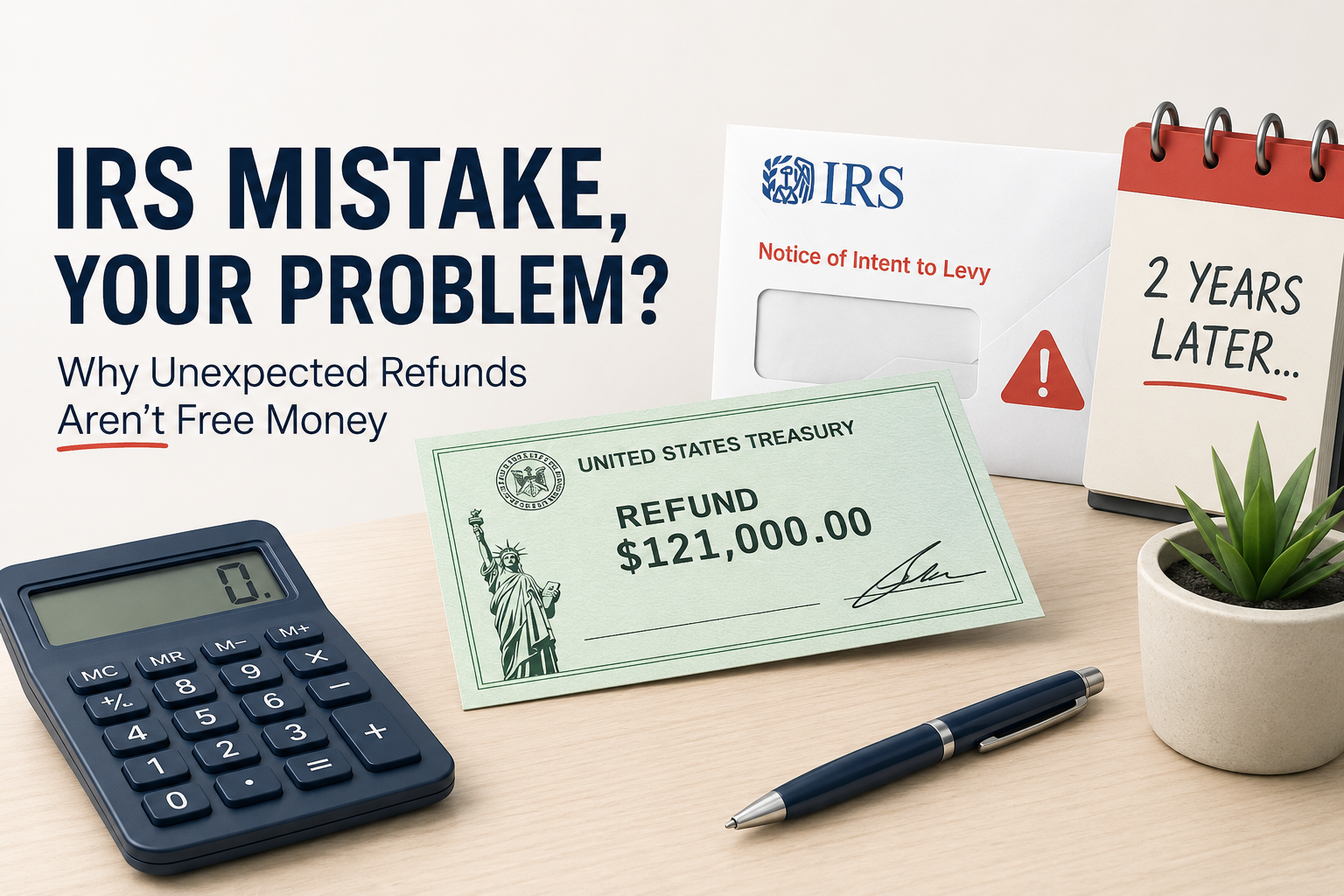
Here’s a story that should make every business owner pay attention. A company paid its employment taxes on time, filed its Form 941 correctly, and did everything right. Then the IRS made a mistake. The IRS treated the company as being entitled to a COVID Employee Retention Credit it never claimed, assessed the tax liability as zero, and sent over a refund of more than $121,000.
Free money, right? Time to book that trip to Bali? Not so fast.
Look, I get it. When the IRS sends you a check you didn’t ask for, your first instinct isn’t to call them and say hey I think you made a mistake please take this back. Nobody does that. You think maybe the tax gods finally smiled upon you. Maybe it’s karma for all those years of paying on time. Maybe you just won the world’s most boring lottery.
But here’s the thing. The IRS always comes back for its money. Always.
Two years later the IRS realized the error and sent a letter saying the company might have received a refund it wasn’t entitled to. The company didn’t respond and didn’t pay. Maybe they were hoping the IRS would forget. Spoiler alert. The IRS doesn’t forget. They just take a while to remember.
The IRS then reversed the credit, made a supplemental assessment for the full amount, and issued a Notice of Intent to Levy.
The company fought back in Tax Court, arguing that the original assessment was correct and complete, so the IRS could only recover the money through a separate lawsuit. The Tax Court disagreed. The court held that when the IRS incorrectly calculates the amount of an original assessment and that mistake is material, the IRS can make a supplemental assessment to fix it. The company owes the money back. Plus interest.
So much for Bali.
What This Means for You
If you receive a refund you didn’t expect or didn’t request, don’t just deposit it and move on. And definitely don’t spend it on anything you can’t return. The IRS makes mistakes all the time. Their systems are a mess and credits get applied incorrectly. But that mistake doesn’t become your windfall. If the IRS figures it out later, and they usually do, they’re coming back for it.
And ignoring their letters? That only makes it worse. This company had a chance to sort things out when the IRS first sent that letter. Instead they stayed quiet and ended up in Tax Court facing a levy.
The Takeaway
When the IRS sends you money you weren’t expecting, treat it like a red flag, not a gift. I know it’s tempting to think of it as a thank you for being a good taxpayer. It’s not. Contact your CPA immediately to figure out what happened. If there’s been an error, it’s better to address it proactively than to wait for the IRS to come knocking with interest charges and collection notices.
Got an unexpected refund or a confusing IRS notice? Contact FACTS CPA before it turns into a bigger problem.