Double Books, Double Trouble: Business Owner Discovers IRS Has No Sense of Humor
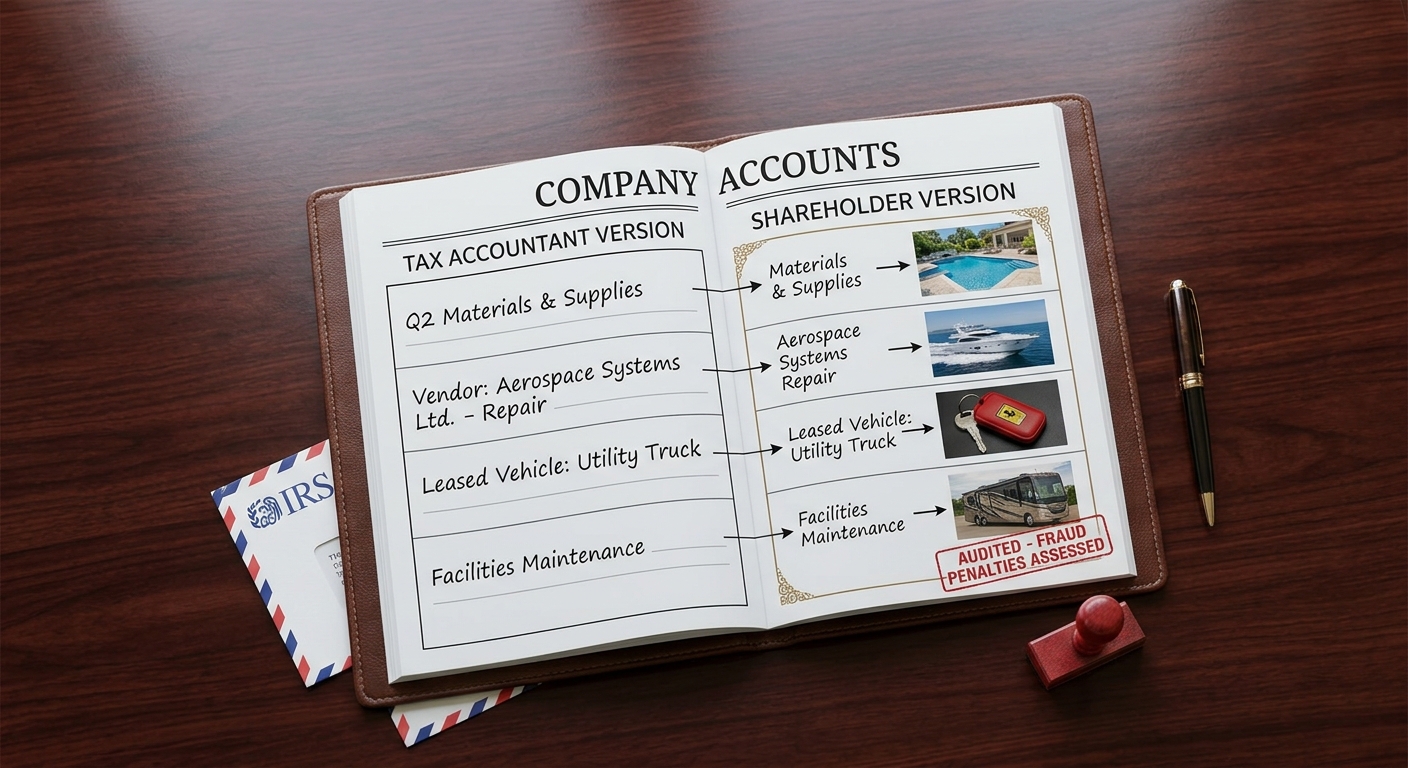
A California CEO recently tested an age-old question: what happens when you treat your company like a personal ATM and hope nobody notices? The Tax Court just answered, and the taxpayer is not going to like his bill.
Our protagonist worked his way up in a family aerospace manufacturing business, eventually becoming CEO. Business boomed. And somewhere along the way, he had a brilliant idea: what if the company just…paid for everything? The house renovations. The landscaping. The pool. The tennis court. The boat. The RV. Multiple leased vehicles. At a certain point, you have to admire the commitment. Most people embezzling from their company stop at a nice watch.
The twist? He was the bookkeeper. No oversight, no accountant looking over his shoulder, just a man, his QuickBooks, and a dream.
Here’s where it gets creative. He kept two sets of books. One for shareholders, one for the tax accountant. In the shareholder version, personal expenses got relabeled with the names of actual business vendors. Paid your pool contractor? That’s definitely “industrial equipment repair.” Home theater system? “Materials and supplies.” It’s like a shell game, except the shells are spreadsheet cells and the pea is a felony.
For the accountant’s version, he’d clean up some of the payee names but leave the bogus expense codes intact. So the tax returns dutifully reported his pool as cost of goods sold. Titanium is expensive, folks.
But the pièce de résistance? When applying for a Ferrari lease, he listed two income figures: “Verifiable” and “Actual.” The actual number was five times higher. Apparently the Ferrari dealership deserved the truth, but the IRS could make do with the fiction. You have to respect a man who commits tax fraud but draws the line at lying to a luxury car salesman.
When the IRS came knocking with fraud penalties, the taxpayer unveiled his defense: he wasn’t hiding income from the government, he was hiding it from his own employees. See, if they knew how much he was making, they might ask for raises. And maintaining an elaborate years-long dual-bookkeeping scheme across hundreds of transactions was simply easier than saying “no” in a salary negotiation.
The court, shockingly, did not buy this.
They noted that he’d correctly label legitimate business expenses while simultaneously disguising personal expenses to the same vendor in the same month. If you’re trying to hide your income from nosy coworkers, why would you only lie about the pool guy? The court called his explanation “implausible,” which is judicial speak for “sir, please.”
He also tried blaming the outside accountant for approving the whole setup. Small problem: the accountant was dead. The court pointed out that even if the deceased accountant had blessed coding pool maintenance as equipment repair, that would just mean they were both committing fraud. It’s not the exoneration he thought it was.
The evidence of fraud wasn’t exactly subtle: consistent underreporting, two sets of books, lies to the tax preparer, concealment of assets, and an explanation that required believing a man maintained an elaborate criminal conspiracy to avoid an HR conversation. Oh, and he’d already been criminally charged for filing false returns. A jury acquitted him on most counts, but civil fraud has a lower bar, and this time the bar was met with room to spare.
The lesson? If your company is funding your pool, your boat, your RV, and your Ferrari, the IRS will eventually have questions. And “my employees would’ve been jealous” is not the answer.