The $140 Million Tax Debt and the Ultimate Lowball Offer
During the dot-com boom, a software entrepreneur hit the ultimate payday: selling his company for a staggering $3.5 billion. Most people with $3.5 billion buy a private island, hire a fleet of advisors, and relax. Our protagonist, however, decided to get creative with his tax return.
To shield his massive payout, he funneled $110 million through a bogus partnership designed to manufacture fake tax losses. It was the financial equivalent of trying to hide an elephant behind a houseplant. Unsurprisingly, the Tax Court took one look at the arrangement and declared it an illegal sham.
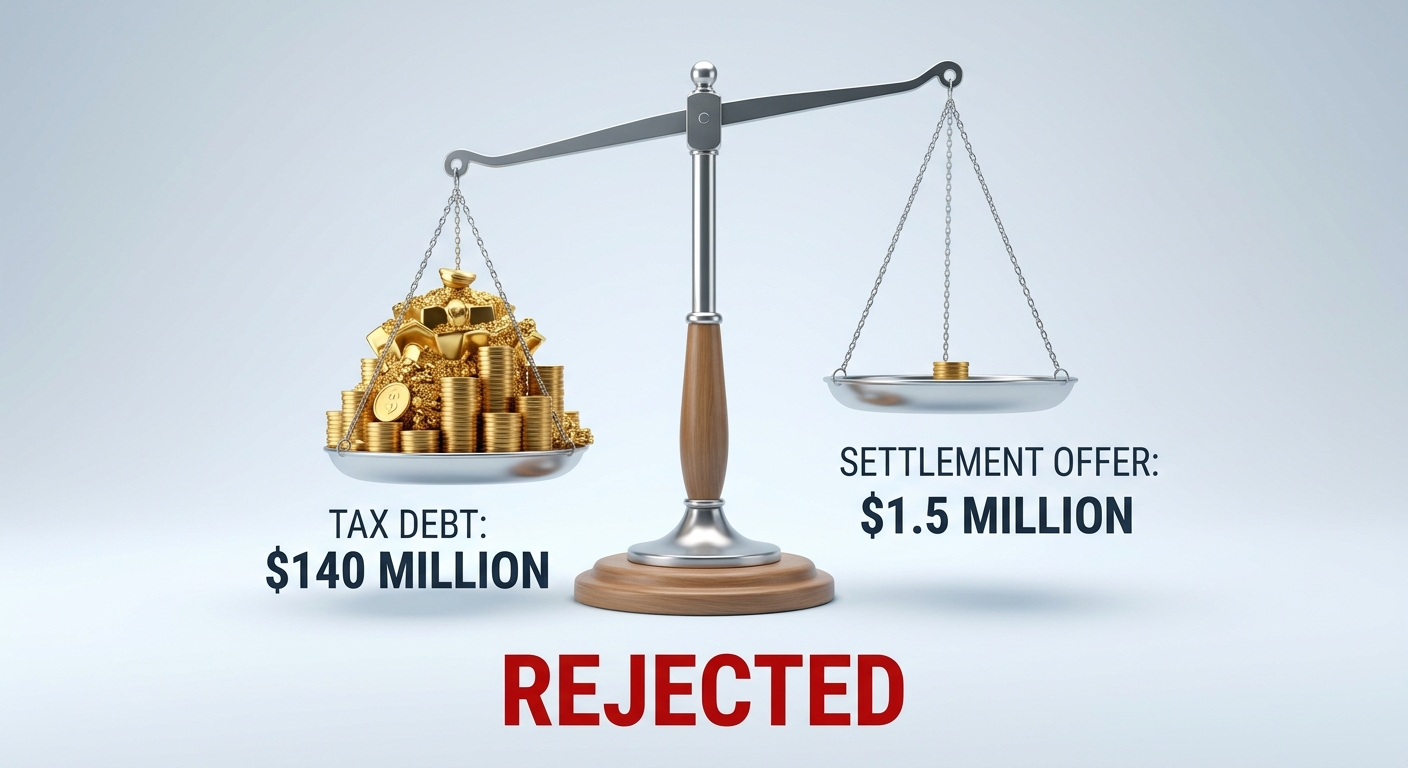
Fast forward through years of unpaid taxes, interest, and penalties, and the final bill arrived: an eye-watering $140 million.
Instead of paying, our founder ignored the problem until the IRS initiated formal collection proceedings. Cornered, he decided to test his negotiation skills. He submitted an Offer in Compromise, the official IRS process allowing taxpayers to settle debt for less than they owe if they genuinely lack the funds.
His proposed settlement? A cool $1.5 million.
That’s roughly a 99% discount. He was effectively offering the IRS a single penny on the dollar to wipe away a small fortune in tax liabilities.
The IRS collections team launched an investigation and quickly uncovered delayed tax filings, undisclosed assets, and suspicious ties to a family trust. They calculated he could actually afford at least $5.9 million.
But the IRS didn’t just reject the deal over the math. They shot it down on public policy grounds.
The agency’s logic was delightfully direct: if the government let a mega-wealthy entrepreneur run an illegal tax shelter and walk away paying 1% of his bill, voluntary compliance would collapse. Everyday taxpayers grinding out 9 to 5’s would look at that deal, throw their tax forms in the trash, and ask why they bothered playing by the rules.
Unsatisfied, the founder dragged the IRS through Tax Court and up to a federal court of appeals, arguing the rejection was unfair. The courts firmly backed the IRS, ruling that the agency has every right to protect public trust by refusing clearance-rack settlements to wealthy tax dodgers.
The IRS does settle debts for taxpayers in tight spots, but it isn’t a Black Friday sale. If you made billions, used a sham tax shelter, and have assets lurking in trusts, offering one cent on the dollar isn’t going to fly.