The Gift Card Gambit: When 5% Cash Back Becomes a Full-Time Job
A physicist-turned-consultant recently proved that a PhD and a rewards credit card can be a dangerous combination.
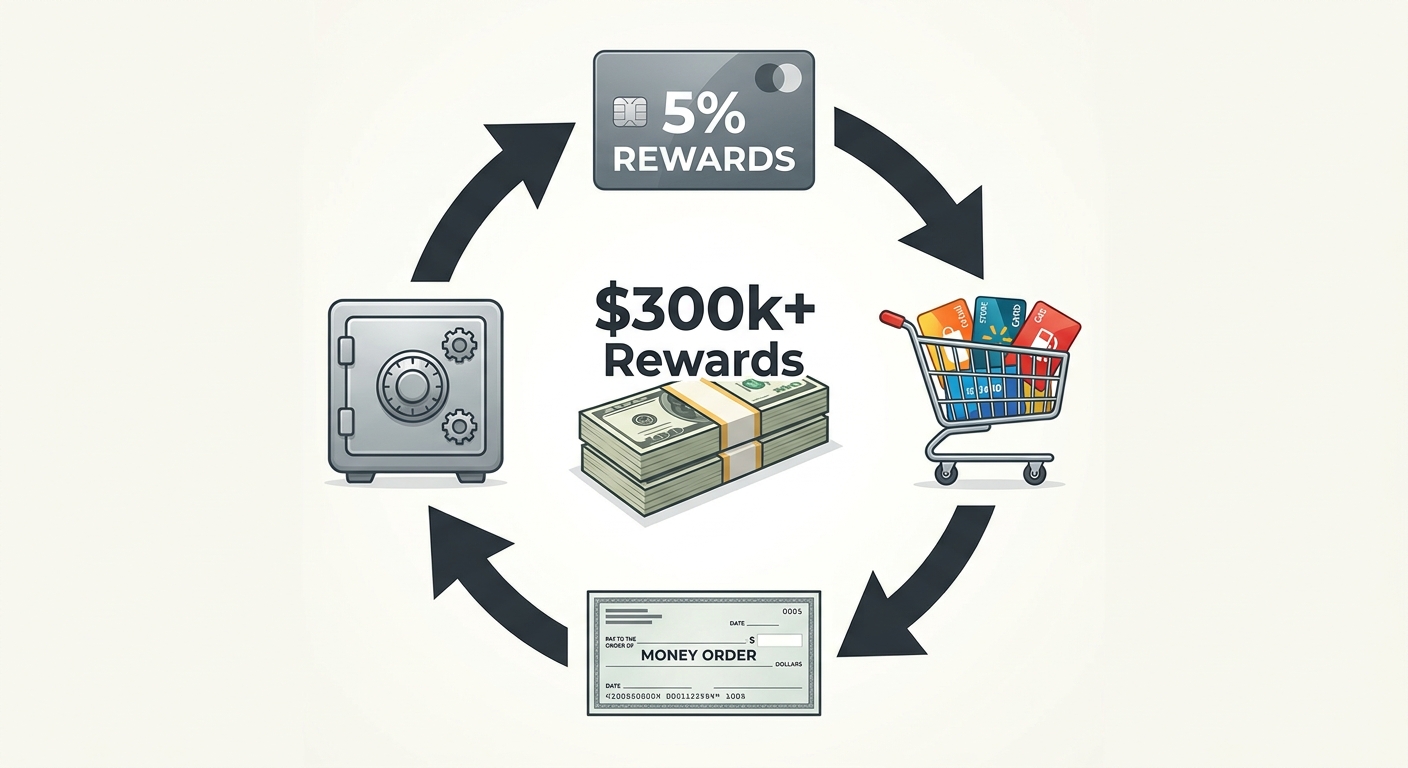
The scheme was beautifully simple. His credit card paid 5% back on grocery store purchases. Gift cards are sold at grocery stores. Gift cards can be converted to money orders. Money orders can be deposited in a bank account. Bank accounts can pay off credit cards. Repeat forever.
So that’s what he did. Over a two-year period, he charged roughly $6.4 million on his credit cards. Over 99% of that was gift cards, debit card reloads, and money orders. He deposited about $4 million in money orders into his bank account. The man was essentially running a small financial institution out of the checkout line at CVS.
The rewards haul? Around $36,000 the first year. Approximately $277,000 the second year. All from a credit card that was meant to give you a few bucks back on your weekly groceries.
The credit card company eventually noticed and closed his accounts. But not before he’d collected over $300,000 in cash back rewards.
Then the IRS showed up.
The IRS has a longstanding policy that credit card rewards aren’t taxable income. If you buy a $100 item and get $2 back, you didn’t earn $2, you just bought the item for $98. It’s a rebate, not a paycheck.
But this? This felt different to the IRS. Their argument: gift cards are “cash equivalents.” You can’t get a rebate on cash. Therefore, the rewards were taxable income.
The Tax Court disagreed. Gift cards, the court noted, are products. They have UPC codes. You buy them off a rack. They’re not redeemable for cash, that’s literally why he had to convert them to money orders. The IRS can’t just call something a “cash equivalent” because a physicist found a creative use for it.
However, and this is important, our protagonist didn’t win completely. Some of his rewards came from buying money orders directly with his credit card, or from loading cash onto debit cards. Those aren’t products. That’s just moving money around with extra steps. The court ruled those rewards were taxable.
The court also delivered a message to the IRS that basically amounted to: “Please write down your rules so we don’t have to do this again.”
The takeaway? Credit card rewards generally aren’t taxable, even if you game the system into six figures. But if you’re literally buying money orders with a credit card, you’ve probably crossed a line. Also, maybe the grocery store clerks deserve a thank-you card for processing thousands of gift card transactions without staging an intervention.